Which Blended Learning Model Should I Use?

I get this question all the time in coaching and coaching periods! First, permit’s be very clear about the definition of blended learning.
Blended mastering is the mix of lively, engaged studying on the net with active, engaged mastering offline to provide college students with more command above the time, location, rate, and path of their discovering.
Tucker, C. (2022). The Entire Guide to Blended Discovering. Solution Tree.
Future, let’s evaluate the taxonomy of blended understanding versions, specifically the rotation designs.
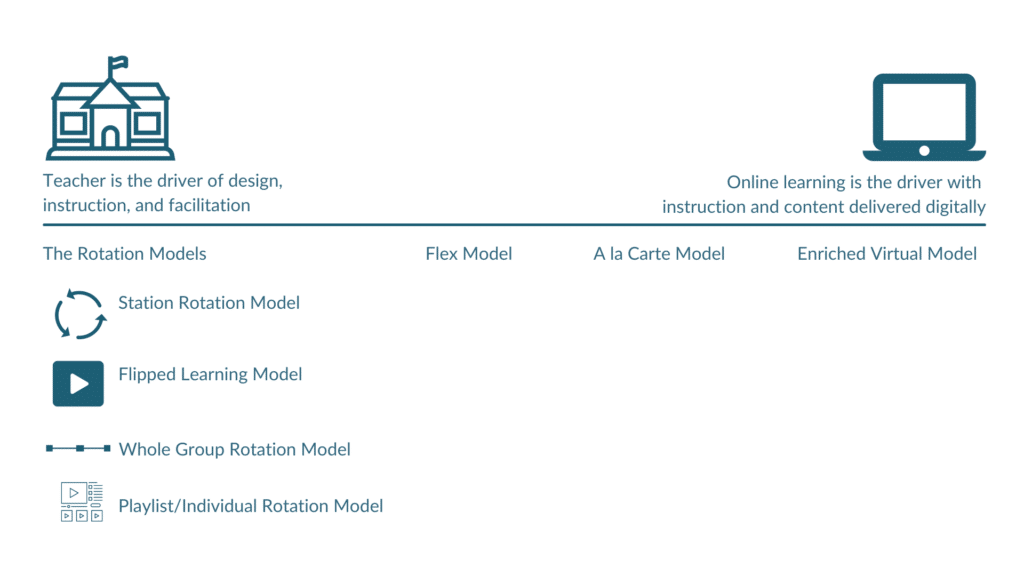
The rotation designs operate nicely in a physical classroom, on a hybrid/blended timetable, or in a remote understanding problem (as prolonged as offline discovering pursuits are integrated into the university student’s remote mastering lessons). It’s that adaptability that helps make these rotation styles so eye-catching and adaptable!
Now that I’ve described blended discovering and reviewed the spectrum of blended finding out styles, allow’s shift to the issue at hand.
How do I determine which blended studying design to use?
I stimulate teachers to look at 3 questions when determining which blended studying design to use for a lesson or sequence of lessons.
- What are the understanding targets or preferred results?
- What are the learners’ desires, understanding choices, language proficiencies, and so forth., in your course?
- How do you want to use your time in the course?
These a few inquiries are the best area to start off when selecting which blended understanding model to use. The solutions to these inquiries clarify lesson objectives, just take learner needs into consideration, and enable teachers detect the most effective use of their time and strength in a lesson.
Let’s check out each and every rotation design and believe about them by way of the lens of these a few questions.
The Station Rotation Design
The station rotation model is composed of a sequence of stations, or studying functions, that learners rotate as a result of. This model has a few varieties of stations: a) teacher-led, b) online, and c) offline. The trainer-led station will make it possible to differentiate instruction, modeling sessions, guided practice, and comments to improved meet up with the requires of modest groups of learners. The on the internet and offline stations enable college students additional command in excess of the rate and path of their development by mastering activities. They may work individually or collaboratively at these stations, directing their learning and accessing peer help.
Ideal Outcomes
College students exercise and use particular principles and techniques
Students communicate and collaborate properly
College students do the job independently to navigate finding out tasks
Pupils follow their self-regulation and social-psychological learning expertise
Learner Needs
College students will gain from differentiated instruction, styles, and observe
College students will reward from a little group dynamic where they can access peer assistance
Learners have to have to follow their conversation and collaboration capabilities
Instructor Time & Emphasis
Supply differentiated instruction
Lead interactive modeling sessions
Guideline apply and application
Give comments as college students do the job
Aid little group conversations
The Full Group Rotation Product
The full group rotation product rotates the total course among on-line and offline learning functions. This is an current model of the lab rotation design since enhanced obtain to devices in classrooms has made going from a classroom to a pc lab unnecessary in most educational facilities. The complete group rotation aims to convey a higher degree of intentionality to the conclusion about what comes about on the net compared to offline. The teacher can guide entire team mini-lessons, reveal a process, or product a approach or talent for the entire course. The offline activities can be collaborative and make effective sound devoid of becoming distracting or problematic. The on-line parts of the lesson make it possible for students additional regulate around the rate and route of their learning and free of charge the trainer to get the job done with people today or tiny teams of college students.
Wished-for Results
Introduce the course to a new notion, talent, course of action, or challenge
Pique university student interest, travel inquiry, or assess prior information
Obtain diagnostic or pre-evaluation information to gauge college student demands, skills, or abilities
Let for individualized observe working with on the web computer software or plans
Learner Requirements
Students will benefit from participating in discussion or finding out actions with friends
College students need to have time to self-pace via observe on line
Particular person students will profit from time with the trainer for re-educating or further scaffolds and help
College students have to have time to make progress on a piece of creating, general performance activity, or venture
Teacher Time & Concentrate
Present information and facts or design one thing for the full group (small to no differentiation)
Pull personal or smaller teams of learners for added instruction and/or aid
Notice learners as they communicate and collaborate to give responses and informally evaluate talking and listening abilities
The Flipped Classroom Design
The flipped classroom model shifts the transfer of information and facts on-line with movie so that students can management the rate at which they take in and course of action new details. This frees the trainer from the entrance of the place and makes it possible for them to invest far more time supporting pupils as they apply and observe in the classroom.
Wanted Outcome
Permit students to self-speed via new details
Dedicate course time to follow and application where by college students can entry teacher and peer assist
Make information a lot more obtainable by submitting it on the net wherever learners can pause, rewind, and rewatch add shut captioning gradual down the velocity of a video clip
Learner Requires
Learners will reward from controlling the speed at which they engage with new facts
Pupils may well gain from repeat publicity to explanations, instruction, or versions
Students will advantage from extra time in course to observe and utilize with the guidance of their trainer and friends
Teacher Time & Aim
Offer aid, scaffolds, and feedback as students apply and apply
Pull particular person or small groups of students who will need drastically far more help or personalized explanations into a tiny stay instruction session
The Playlist Product
The playlist model is a sequence of finding out activities developed to transfer learners towards a distinct objective or consequence. Lecturers can use the playlist model, also recognised as the specific rotation design, to train a strategy, tactic, skill, course of action, or wander college students via the areas of a multistep functionality undertaking or project. This model is ideal for any discovering sequence wherever learners gain from variable time on process.
Preferred Outcomes
Learners manage the rate of their progress by way of a studying sequence
Students work independently to navigate finding out responsibilities
College students practice their self-regulation and social-emotional understanding capabilities
Students replicate on their progress
Learner Requires
Students will advantage from variable time on job
Students will gain from differentiated learning paths
Learners will benefit from a person-on-one particular conferencing with their teacher
Trainer Time & Focus
Conference with person college students at essential moments in the playlist to critique formative assessment information, supply feed-back, explore their development, and make changes to their individual playlists
Embracing Our Role as Architects of Learning Activities
Just like architects design different structures to meet up with several demands, teachers have to design diverse kinds of classes to fulfill unique aims and university student needs. This demands that educators establish self esteem applying a collection of tutorial styles.
For several years educators have addressed the entire-group, trainer-led design like a metaphorical swiss military knife, but it doesn’t function for every predicament. A single tutorial product will not do the job for just about every set of mastering aims or desired outcomes. Alternatively, lecturers have to have to cultivate a toolbelt entire of adaptable products they can choose from to satisfy the needs of their students, guaranteeing that all pupils progress toward firm typical-aligned finding out plans.