Thinking of Getting a Pet Crab? Start with These Species
Fish may be the stars of an aquarium, but crabs have a special talent for stealing the spotlight. With their sideways walks, curious movements, and surprisingly expressive personalities, these little crustaceans can turn an ordinary aquarium into something much more interesting. Some are colorful enough to look like miniature fantasy creatures, while others spend their time digging, climbing, and exploring their surroundings.
However, choosing a pet crab is not quite as simple as picking the prettiest one at the store. Different species have different habitat requirements, temperaments, and dietary preferences. Some live almost entirely underwater, while others need plenty of dry land to remain healthy.
If you are thinking about keeping a pet crab, understanding these differences is the best place to start.
Why Are Pet Crabs Becoming More Interesting to Aquarium Enthusiasts?
Crabs offer something different from traditional aquarium fish. They are active in their own unique ways, interact with their surroundings, and often display fascinating behaviors that make them enjoyable to observe.
For aquarium enthusiasts, they can also introduce an entirely new dimension to aquascaping. Rocks, driftwood, aquatic plants, sandy areas, and small caves can become part of a carefully designed environment that supports both animal welfare and visual appeal.
For retailers, wholesalers, and aquarium businesses, ornamental crabs also represent an interesting category within the broader aquatic animal market. Understanding the characteristics of different species can help businesses introduce suitable varieties to customers while providing better care guidance.
Of course, the most important consideration remains the animal’s welfare. A beautiful crab is only truly impressive when it is living in an environment that meets its needs.
1. Vampire Crab: A Colorful Little Explorer
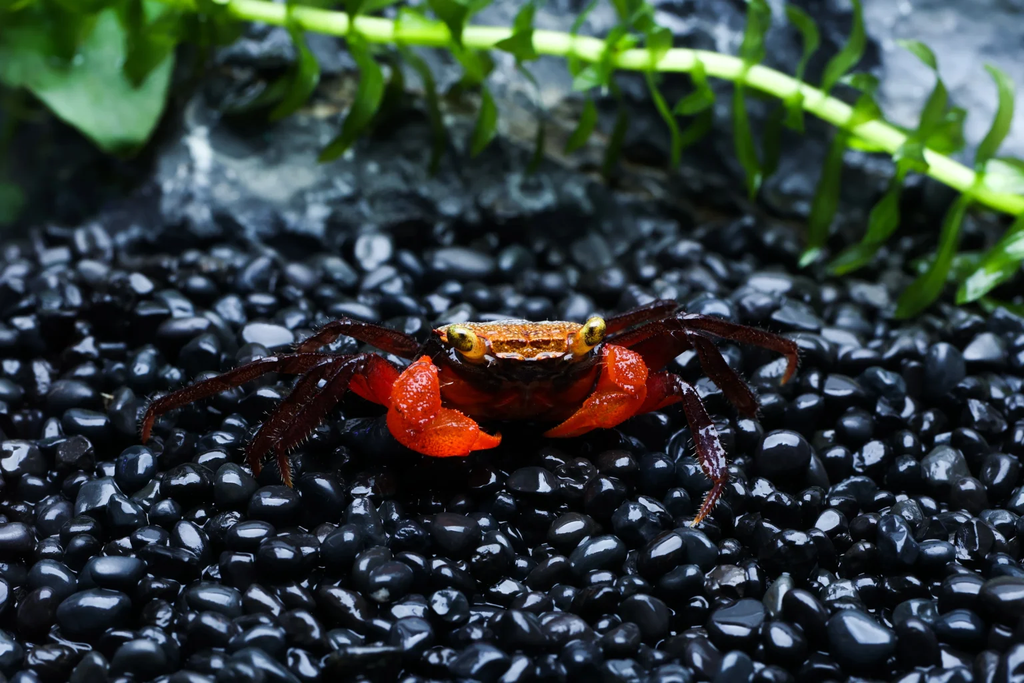
Vampire crabs are among the most visually distinctive crabs available in the ornamental pet trade. Belonging to the genus Geosesarma, these small crabs are known for their vibrant colors, unusual appearance, and bright yellow or orange eyes.
Depending on the variety, their bodies may display shades of purple, red, orange, or dark brown. Their striking appearance makes them particularly attractive to enthusiasts interested in creating natural-looking terrariums or paludariums.
Unlike many aquatic animals, vampire crabs spend most of their time on land. They still need access to freshwater, but their habitat should include a substantial terrestrial area with moist substrate, hiding places, and suitable humidity.
A paludarium is an excellent choice for this species. It combines land and water in one enclosure, allowing the crab to explore, hide, and move between different environments.
Vampire crabs are generally more active during the evening and nighttime. Their behavior can be fascinating to observe, especially when they explore their surroundings or interact with other crabs.
For beginners, they can be an appealing option when their habitat is properly prepared.
2. Thai Micro Crab: Tiny but Fascinating
If vampire crabs are miniature explorers, Thai micro crabs are miniature mysteries.
The Thai micro crab (Limnopilos naiyanetri) is an exceptionally small freshwater species. Its delicate legs and compact body make it look almost like a tiny underwater spider.
Unlike many commonly sold pet crabs, Thai micro crabs are fully aquatic. They do not require a separate land area, making them suitable for certain freshwater aquarium setups.
Their small size makes them particularly interesting for aquarists who enjoy nano aquariums and planted tanks. They can spend much of their time among aquatic plants, mosses, and other structures.
Because they are so small, however, they require careful consideration when selecting tank mates. Larger fish and aggressive aquarium inhabitants may see them as food rather than companions.
Their feeding habits also deserve attention. They benefit from access to suitable fine foods and microorganisms rather than relying entirely on leftover fish food.
For aquarium enthusiasts who appreciate subtle details, these little crabs can be a rewarding addition to a carefully maintained aquarium.
3. Red Claw Crab: A Familiar Favorite
Red claw crabs are another recognizable option in the pet crab world. Their dark bodies and contrasting reddish claws give them an unmistakable appearance.
They are often sold as freshwater crabs, but this description can be misleading. Red claw crabs generally benefit from brackish water conditions and access to land. A completely submerged freshwater aquarium is not an appropriate long-term environment for them.
A suitable enclosure should provide shallow water, a land area, hiding places, and enough room to explore. Water conditions should be adjusted according to the species and its requirements.
Red claw crabs are opportunistic omnivores. They may consume plant material, algae, prepared foods, and small animal matter. Their feeding behavior makes them interesting to observe, although they should not automatically be considered harmless tank mates for small fish or shrimp.
For anyone interested in keeping this species, researching its natural habitat before purchasing is essential.
4. Fiddler Crab: The One with an Oversized Claw
Few crabs are as recognizable as fiddler crabs. Male fiddler crabs possess one enlarged claw that can look almost comically oversized compared with the rest of their bodies.
This distinctive feature is not simply decorative. The large claw plays an important role in communication, courtship, and territorial displays.
Watching a male fiddler crab wave its claw is one of those small moments that makes keeping crustaceans so entertaining.
However, fiddler crabs are coastal animals rather than conventional freshwater aquarium inhabitants. They typically require brackish water, sandy or muddy substrate, and a suitable land area.
Their habitat should allow them to move between water and land naturally. A shallow aquarium with an accessible beach-like section can help recreate these conditions.
They also need appropriate social arrangements and enough space to avoid unnecessary territorial conflicts.
Fiddler crabs are especially interesting for enthusiasts who enjoy observing animal behavior rather than simply looking at colorful aquarium inhabitants.
5. Panther Crab: A Spotted Aquarium Character
Panther crabs are known for their attractive spotted patterns, which resemble the markings of a miniature leopard.
Their appearance makes them appealing to aquarium hobbyists looking for something unusual. Depending on the species and individual, their bodies may display contrasting dark spots against lighter backgrounds.
Some panther crabs can be maintained in freshwater aquarium environments, although their specific requirements should always be verified before purchase.
They are generally more suitable for aquarists who understand crab behavior and are prepared to provide appropriate hiding places and carefully selected tank mates.
Like many crabs, they are opportunistic feeders and may prey on smaller aquarium inhabitants. A species-focused aquarium is often a safer option than assuming they will peacefully coexist with every fish or shrimp.
What Should You Prepare Before Bringing a Pet Crab Home?
Choosing a species is only the beginning. A healthy crab needs a habitat that reflects its natural environment as closely as reasonably possible.
Here are several important considerations.
Understand Its Water Requirements
Not every crab belongs in freshwater.
Some species require brackish water, while others thrive in freshwater environments. Semi-terrestrial crabs may also need a combination of land and water.
Before purchasing, identify the species accurately and research its specific water requirements.
Provide Suitable Land and Hiding Places
Many crabs are excellent climbers and surprisingly good escape artists.
A secure enclosure is essential. Depending on the species, provide rocks, driftwood, caves, plants, and appropriate substrate.
Land-dwelling and semi-terrestrial crabs should have enough space to move around comfortably without being forced to remain underwater.
Pay Attention to Molting
Crabs grow by shedding their exoskeletons, a process known as molting.
During this period, they become particularly vulnerable. Some may hide for extended periods, while others become less active or stop eating temporarily.
Avoid disturbing a crab during molting. Its new exoskeleton needs time to harden, and unnecessary handling can cause serious stress.
Choose Tank Mates Carefully
Crabs are not automatically peaceful aquarium companions.
Depending on their species, they may compete for territory, attack smaller animals, or consume fish and shrimp.
A species-only setup can often provide a more predictable environment, particularly for crabs with territorial tendencies.
Finding Healthy Ornamental Crabs for Aquarium Businesses
For aquarium retailers, wholesalers, and importers, selecting suitable ornamental species involves more than appearance. Accurate species identification, responsible sourcing, appropriate handling, and reliable supply arrangements all contribute to a successful aquatic business.
Working with an experienced ornamental aquatic supplier can make sourcing and export coordination considerably easier.
Aquazone Indonesia, an ornamental fish breeder and exporter, supplies more than 500 ornamental fish varieties to aquarium markets worldwide. Businesses looking for an experienced partner can explore its range as a best ornamental fish exporter in Indonesia and learn more about its ornamental aquatic offerings.
The company provides personalized consultation to help buyers select suitable species for their markets, along with export management covering documentation and shipping arrangements.
Professional packing and handling, strict water-quality control, and post-delivery support are also important parts of maintaining quality throughout the supply chain. Aquazone offers a replacement resolution for reported issues within 24 hours, subject to its applicable procedures.
For businesses interested in ornamental crustaceans, its wholesale crabs supplier Indonesia category provides another starting point for exploring available crab varieties.
Long-term partnerships built around quality, consistency, and communication can help aquarium businesses maintain dependable product availability while developing their customer relationships.
Which Pet Crab Is Right for You?
The answer depends on what kind of experience you want.
If colorful appearances and interesting terrestrial behavior appeal to you, vampire crabs may be worth exploring.
If you prefer a tiny aquatic animal for a planted aquarium, Thai micro crabs offer a very different experience.
Red claw crabs and fiddler crabs can be fascinating choices for enthusiasts prepared to manage brackish water and land-based habitat requirements.
Panther crabs, meanwhile, appeal to aquarists who appreciate distinctive patterns and more unusual aquarium inhabitants.
Whatever species you choose, remember that the best pet crab is not necessarily the most colorful or the rarest one. It is the species whose needs you understand and can consistently meet.
With the right preparation, these small crustaceans can become fascinating residents of a carefully designed aquatic environment. Their curious movements, distinctive behaviors, and unique appearances are reminders that the aquarium hobby has plenty of surprises waiting beyond the usual fish.
And sometimes, the most entertaining creature in your aquarium is the one that walks sideways.