Ethiopian Refugees From Tigray Flee To Sudan : NPR
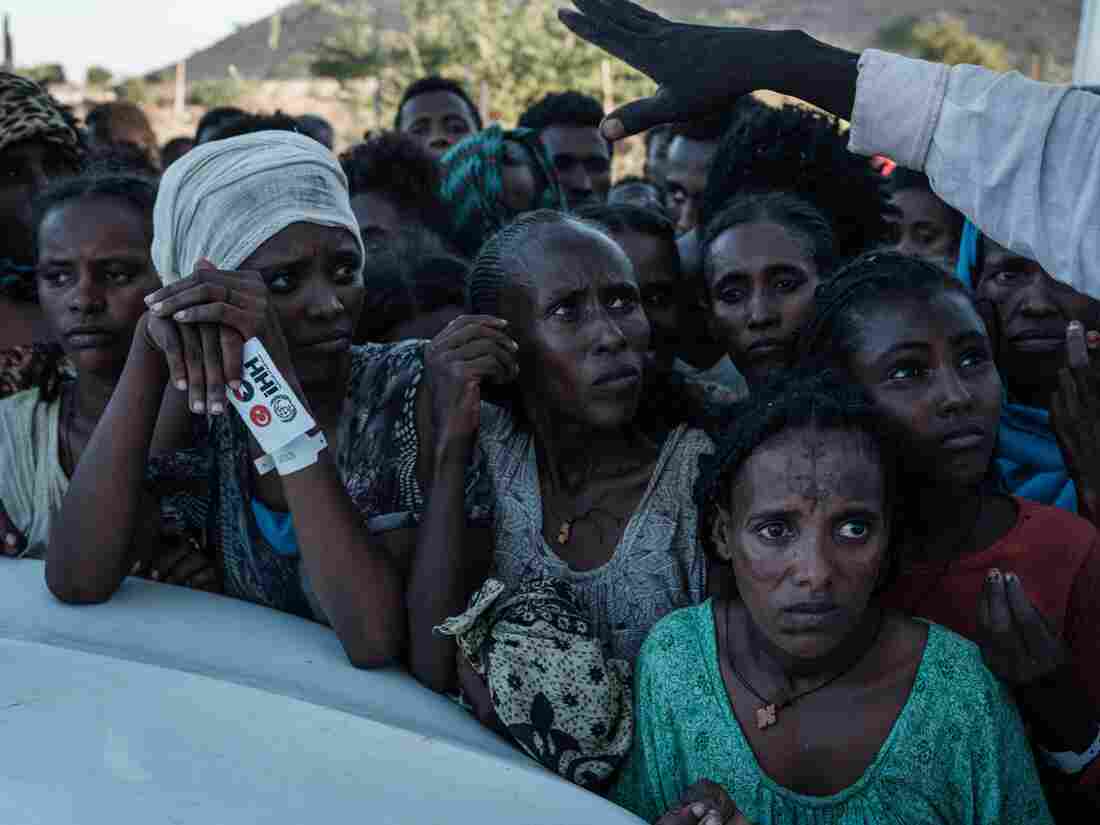
Ethiopians wait for food distribution in front of a warehouse at Um Raquba refugee camp in Gedaref, japanese Sudan, on Dec. 1.
Yasuyoshi Chiba/AFP by using Getty Photos
conceal caption
toggle caption
Yasuyoshi Chiba/AFP by way of Getty Photos

Ethiopians hold out for food items distribution in front of a warehouse at Um Raquba refugee camp in Gedaref, japanese Sudan, on Dec. 1.
Yasuyoshi Chiba/AFP by way of Getty Images
The heat is unrelenting in the middle of a December working day in jap Sudan. It is really hard to discover any shade in this arid landscape. It’s largely dust and boulders — and, for now at least, it is the momentary dwelling of tens of hundreds of Ethiopian refugees who have crossed the border to flee the fighting in their place.

You can find not a lot to make a home. The nearest town, Al Qadarif, is two hrs absent. No drinking water supply exists at the camps, so drinking water is trucked in from miles absent by rugged roads. Refugees are sleeping in makeshift tents and in deserted properties. Some are even sleeping outside with no shelter.
Past thirty day period, the Ethiopian authorities released a army offensive in opposition to a rebellious regional authorities. The ensuing conflict has killed hundreds, and practically 50,000 Ethiopians have crossed the country’s northwestern border into Sudan. It is really a refugee crisis that is straining the humanitarian infrastructure in the region. The United Nations refugee company has appealed for $150 million to help cope with the problem.
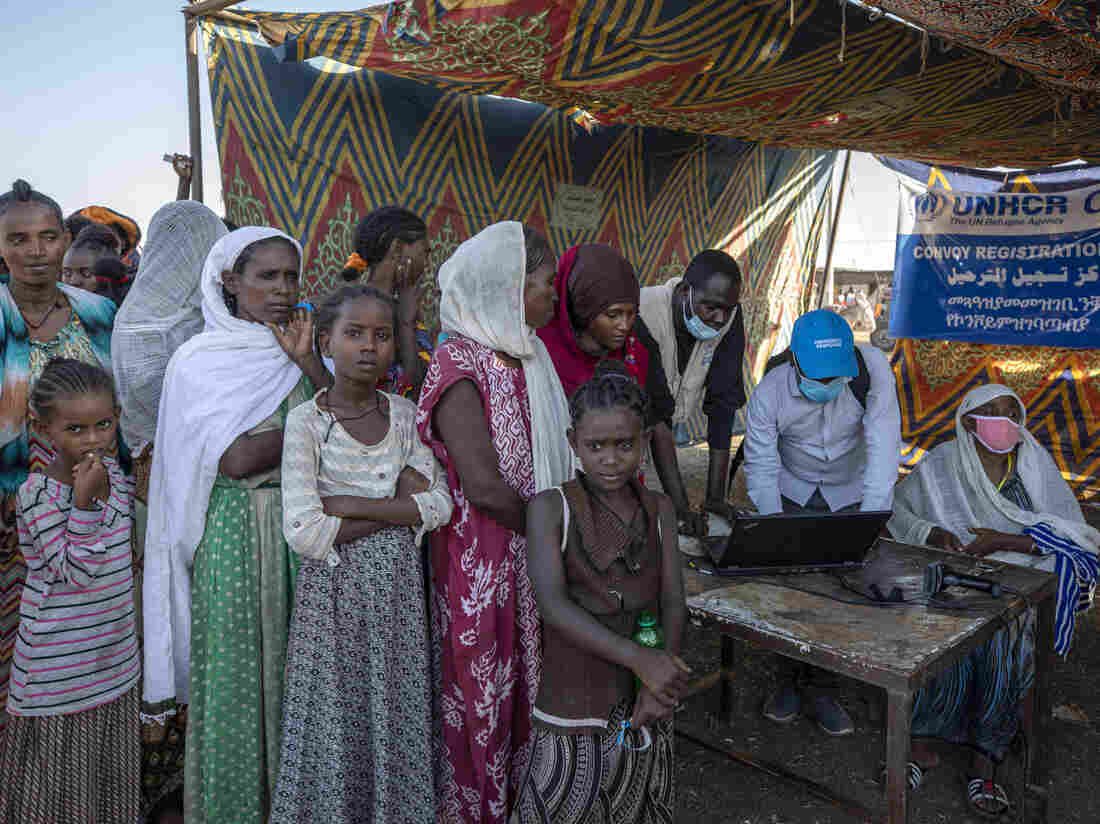
Refugees who fled a conflict in the Ethiopia’s Tigray Region wait around to sign-up their names for a convoy to transfer them to Umm Rakouba refugee camp in eastern Sudan before this 7 days.
Nariman El-Mofty/AP
hide caption
toggle caption
Nariman El-Mofty/AP

Refugees who fled a conflict in the Ethiopia’s Tigray Region wait around to register their names for a convoy to transfer them to Umm Rakouba refugee camp in japanese Sudan earlier this week.
Nariman El-Mofty/AP
At Village 8 Camp, Measho Fishale, 34, is seeking to make a stew out of the sorghum that humanitarian groups have been handing out. It is just not seriously functioning. All she can do is stand previously mentioned the stove in the sun, holding her toddler.
She has seven little ones, but when the battling begun in the town of Mai-Kadra in early November, her two oldest were not at household.
“[Militias] were being slaughtering folks with knives and machetes,” she states.
Lots of other refugees explain the identical scene: They say members of Fano, a youth militia faithful to the federal government, rampaged via Mai-Kadra killing ethnic Tigrayans. The government has continuously disputed that narrative, stating it was a youth militia affiliated with the Tigrayan rebels who killed ethnic Amharas, Ethiopia’s second-most significant ethnic group.
NPR could not independently corroborate the refugees’ claims, but dozens of them explained to the identical story.
Measho suggests she experienced no preference but to operate immediately. She has appeared for the two youngsters she left guiding in Ethiopia, hoping they would have identified their way to the camp, but she hasn’t been equipped to find them.
Standing future to Measho is 55-12 months-outdated Kidan Berhe. She wanted to keep dwelling, inspite of the war and did not imagine she could make the arduous stroll as a result of the bush into Sudan. But then armed adult males swept by means of the city, and she imagined about her children acquiring to return to glimpse for her. She fearful they would be killed as nicely, so she left every little thing and walked for hours towards Sudan.
“This is all I have,” she says, pointing to her outfits. Tears perfectly up in her eyes and she presses her fingers from her confront.
“My gold. My garments. I have missing every thing,” she tells NPR.
She suggests she now feels safe and sound in Sudan but worries about her foreseeable future and about the bleak living circumstances at the camps. Humanitarian employees are struggling to retain up with the stream of refugees and to build up an infrastructure to accommodate them.
Nadir Ibrahim, a local humanitarian worker, states the refugees “will need drinking water there are no latrines they are undertaking open defecation.” If this proceeds, he warns, disease will operate rampant at these camps.
Refugees are performing what they can with whichever they can. They are creating shelter out of grass. They are striving to make injera — the common Ethiopian bread commonly manufactured from a grain referred to as teff — from the sorghum that is presented out by aid businesses.
In Ethiopia, the situation seems a lot more severe. The United Nations has claimed that refugees in the Tigray Region have obtained no aid given that conflict started off. The far more than 96,000 Eritrean refugees in Tigray, who have fled war and repression in the previous two a long time, the U.N. claims, have operate out of food rations. The U.N. has received reviews that refugees are leaving camps because of violence.
Ethiopia and the U.N. experienced attained an agreement giving aid groups accessibility to the Tigray Area, but past week, the Ethiopian armed service shot at a U.N. convoy and the government warned it did not need to have a “babysitter.” On Friday, the Intercontinental Rescue Committee mentioned 1 of its staff members experienced been killed at a camp in Tigray.
Ethiopia has stated that the military operation in the state is around, mainly because it has taken handle of the Tigray Region capital, Mekelle. But the Tigray People’s Liberation Front claims it will not surrender to what it considers an invading army, and preventing has ongoing on several fronts.
The war is a ability struggle in between Ethiopia’s new authorities and its outdated one particular it’s about what the Ethiopian political procedure will appear like in the potential. But in interviews with refugees, the war is about decline. Everybody, no make any difference which side they’re on, is mourning. Some have lost liked kinds a lot of other individuals have dropped households. And just about every inch of the refugee camps in Sudan has grow to be about greedy at some semblance of what they had right before the war.
At the Um Rakuba camp, Fitsum Kidanemariam, 25, claims he remaining his moms and dads again in Ethiopia. He hasn’t been in a position to connect with them, so he will not know their destiny.
He is a slender youthful gentleman and his voice breaks as he points out his scenario. Again household, his really like was artwork, but he experienced to perform in development since, like anyplace in the earth, “there is no dollars in art,” he claims.
He walks past a huge tent crammed with sacks of sorghum, past a minimal hut in which women of all ages offer coffee. He enters what looked like an abandoned schoolhouse. It’s just a shell now — most of the windows are damaged there are no doors the paint is peeling. His pals participate in cards on the flooring. On the windowsill, just driving them, he has lined up 7 sculptures that he created out of rocks he discovered in the camp.
On a single of them, he carved the facial area of a lady on one particular aspect and the facial area of a lion on the other.
“The girl is forgiving and respectful,” he suggests. “The lion, like warring guys, will lash out at the slightest touch.”
Fitsum sculpts every working day. For several hours, he meticulously carves rocks using a piece of metal he uncovered at the camp. He is hoping to forget the violence, hoping that his parents are even now alive. He claims he used hours sculpting this rock, dreaming of a different existence wherever people had been significantly less like lions.